Die Tragödie der künstlichen Intelligenz
Artificial “intelligence” is not intelligent. It is a statistical, rule-based system shaped by the data, ideologies and power structures it is built upon. Die Tragödie der künstlichen Intelligenz [The Tragedy of artificial Intelligence] examines artificial intelligence not as an autonomous intelligence, but as a cultural projection. Combining theoretical research with performative experimentation, the project questions why computational systems are increasingly perceived as objective, authoritative or even superior forms of reasoning.
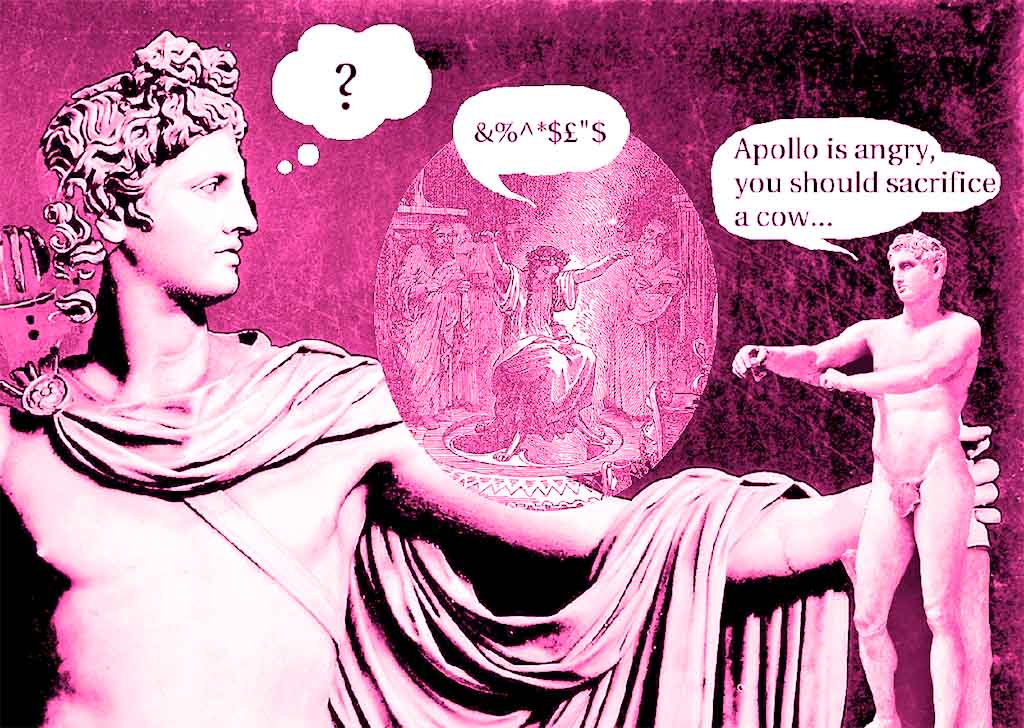
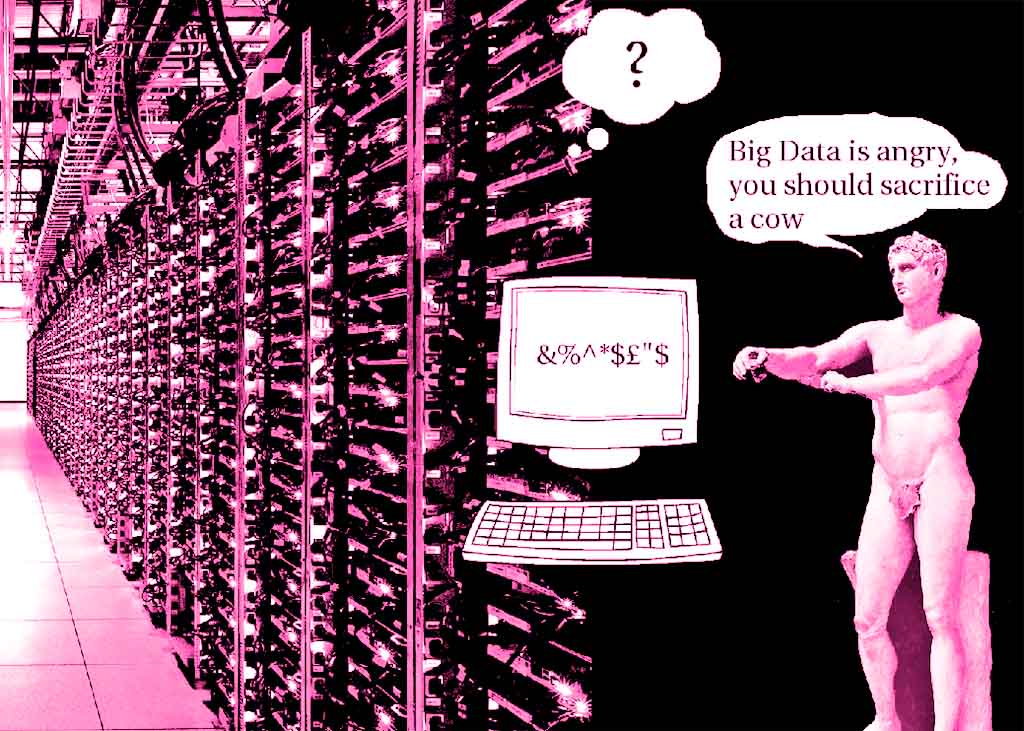
The written work investigates concepts such as intelligence, learning and understanding in relation to computational systems. Rather than treating AI as a neutral tool, I examine it as a political and cultural construct shaped by economic interests, technological optimism and existing social biases. What is described as machine “intelligence” is, in practice, the statistical processing of data through predefined structures – systems that reproduce assumptions and hierarchies while obscuring responsibility behind technical complexity.
This critique extends into a performative installation staged as a sect-like gathering. An Arduino-based system generated fragmented and contradictory prophecies from my own written text, transforming technological determinism into a form of artificial spirituality. Machine-generated statements were preached while visible errors and incoherent outputs disrupted the illusion of machine wisdom.
“Everything is calculable. Nothing is uncalculable.”
I do not ask whether machines can become human, but why humans are so eager to grant machines authority in the first place. The tragedy is not the machine itself, but what humans are allowing it to become.